
How to Read the Room
If you’d prefer to listen to this, click here.
"Attention is the rarest and purest form of generosity." — Simone Weil
A couple of weeks ago I wrote about being a student of humanity and why it's a fundamental leadership practice. Paying attention to what makes people tick is a discipline worth cultivating.
But studying people is one thing. Operating in the moment is another.
What about when the heat is on? When you're leading a group conversation and it turns south. When you're in a tricky one-on-one and you need to tread carefully.
Have you ever 'missed the moment?' Something happened in a conversation, and you go: wait, what just happened there? And from that point on, you're playing catch up.
You know the feeling.
Johan Hari, in his book Stolen Focus, makes the case that our capacity for sustained attention is being systematically eroded by technology, pace, and the environments we've built. Leaders aren't immune. If anything, the pressure of leadership makes it worse. Which is why treating attention as a deliberate practice matters so much right now.
What I want to explore here is how you can sharpen your attention so you 'read the room' and respond well when it matters.
The Four Lenses of Attention
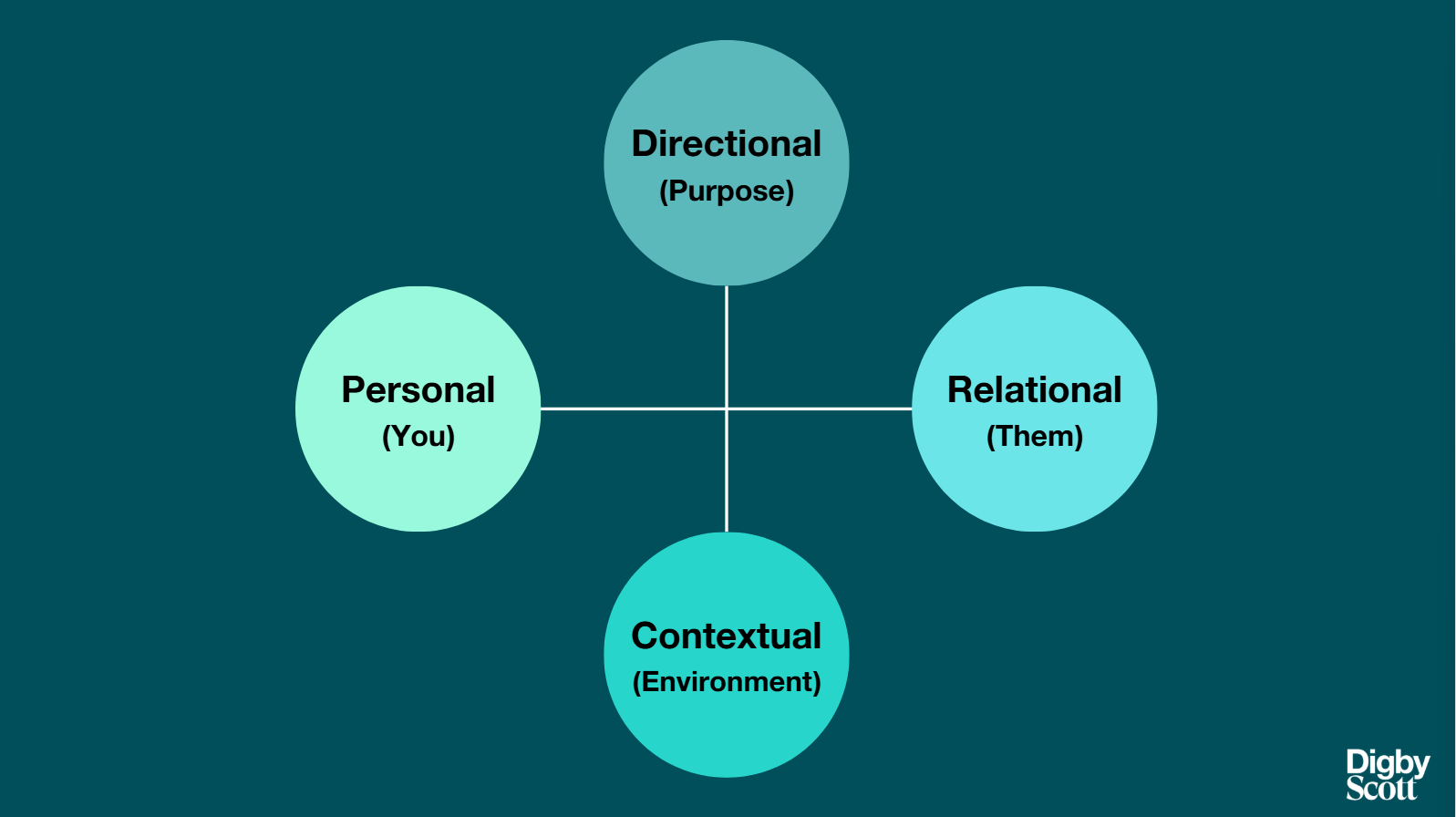
In my experience as a speaker, facilitator and coach, I've come to see four distinct ways of paying attention. I think of them as four 'lenses' I'm continuously looking through when I'm working with people.
Personal (You): your state, and the impact you have.
The first lens is on you. How aware are you of your own state in any given moment? Your language, behaviour, emotions and energy. How do they show up in you? And how do they land on others?
Try this: can you name exactly what you're feeling right now as you read this? Not just 'good' or 'not so good'. Something more specific. The more accurately you can name your state, the more genuinely you can connect with the people you're with.
Relational (Them): the quality of the conversation.
If I asked you to describe the vibe of the last meeting you sat in, how would you describe it?
The Relational lens is about the dance of a conversation. Who's engaged? Who's holding back? What's not being said? It's paying attention not just to the words, but to what's underneath them.
Directional (Purpose): how the conversation is tracking.
We've all been in meetings that go in circles. They burn time and goodwill in equal measure.
This lens asks: are we on track? Are we in the weeds, or too abstract? What's moving things forward, and what's getting in the way?
Contextual (Environment): what's shaping how people are showing up.
Context matters more than most of us acknowledge. The tired team member. The impact of only getting the pre-reading yesterday. The organisational change that's quietly unsettling people.
You might not be able to change the context. But you can take it into account.
When you use these four lenses together, you get a much more complete picture of what's actually happening in the room. And when you can see and name what's happening, you're in a far stronger position to shape what comes next.
I've created a free one-pager with practical tips and guiding questions for each lens. Download it here.
Pick one lens to focus on over the next week, and use it deliberately. Notice what you pick up that you might otherwise have missed.
A few questions to sit with:
Which lens do you draw on most naturally? Which do you tend to neglect?
Think of a recent conversation that didn't go well. Which lens might have helped most?
What would it mean for your leadership to be genuinely, consistently tuned in?
If I’ve piqued your interest, it’s exactly the stuff that I cover in my Mastering Facilitative Leadership masterclass. If you’re looking to help your leaders foster the collective brilliance of their people, this gives them the skillsets, mindsets and tools to do just that. Get in touch for a chat.